

Author: Editorial board
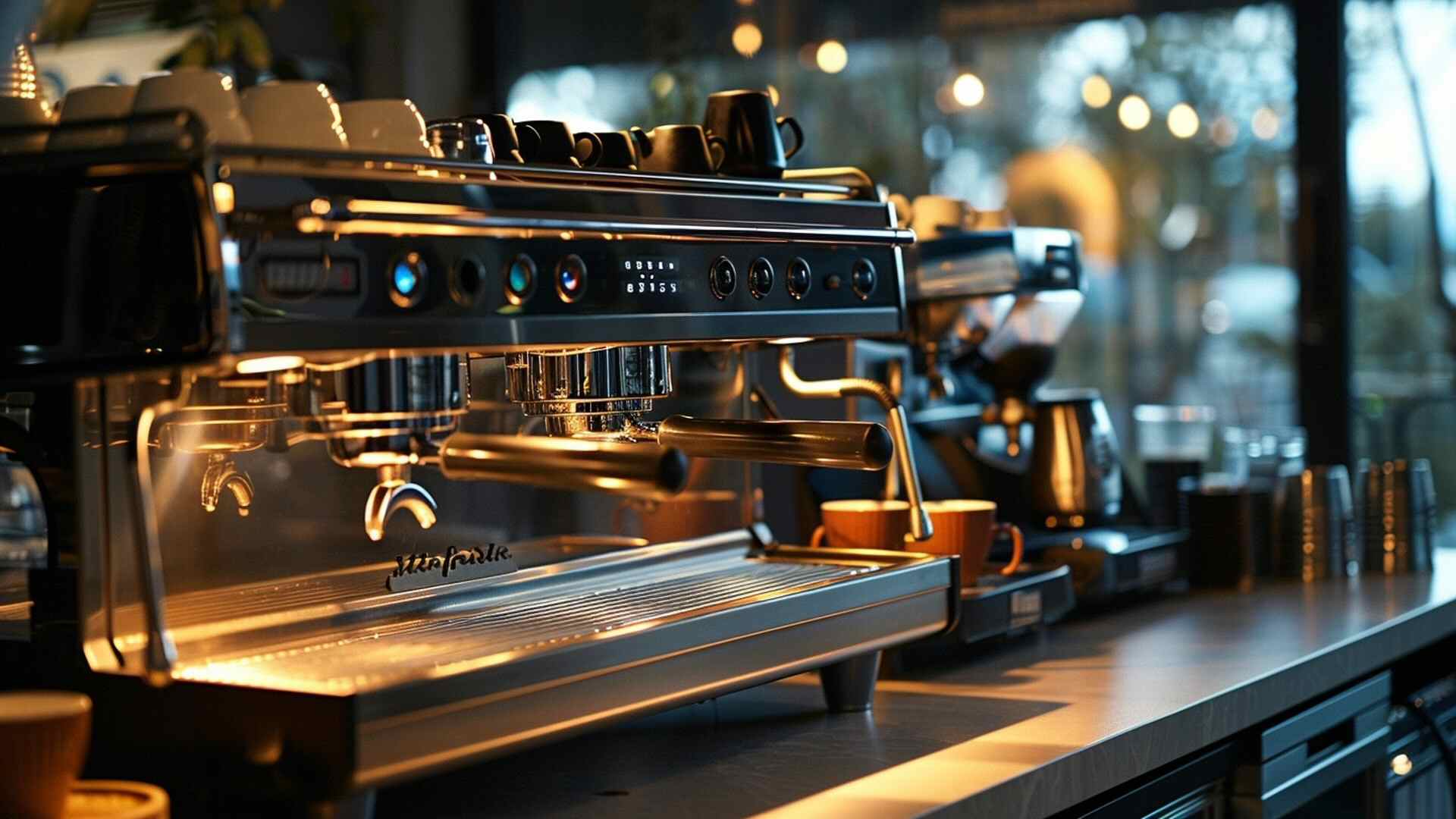
Reliable LED indicators for professional coffee machines
Indicators, backlighting and lighting solutions for coffee machine control panels
LED indicators in professional coffee machines show the machine status and improve the readability of the control panel. We are dealing with complex systems where every design detail affects user experience, operational reliability and product identity.
If you want to understand how to design clear, intuitive, and reliable user interfaces using indicator lights, discover our dedicated comprehensive guide
In machines designed for bars, restaurants, and Ho.Re.Ca environments, the visual interface plays a key role. Backlit buttons, status indicators, LED indicators and illuminated surfaces must communicate information clearly and instantly, while also supporting design and brand identity.
For designers, integrating LED indicators into professional coffee machines is not just an aesthetic choice. Panel hole diameter, panel thickness, supply voltage, lens type, light uniformity and resistance to intensive use all directly affect component performance.
In addition, machines often operate for many hours per day, in warm environments and under frequent on/off cycles. Lighting components must therefore ensure long-term stability and durability.
For this reason, choosing the right lighting components for coffee machines is a critical step in product development.
Best Ho.Re.Ca lighting indicators
The role of LED indicators in professional coffee machines
In a professional coffee machine, the operator must immediately understand the system status. LED indicators and backlighting are used to signal key operating conditions such as:
- machine ready for use
- heating phase
- cleaning cycle
- maintenance required
- function activation
Visibility must remain optimal in very different lighting conditions, from bright bar counters to dim restaurant environments.
For this reason, high-efficiency LEDs are widely used, ensuring stable brightness and long operating life.
According to data from the U.S. Department of Energy, LEDs can exceed 50,000 operating hours before significant lumen degradation. This means fewer replacements and higher reliability for machines operating continuously.
Standard vs custom LED indicators: how to choose
When designing a professional coffee machine, there is no one-size-fits-all solution.
In many cases, high-quality standard components are the most efficient option. They are readily available, cost-effective and help speed up development and industrialization.
When the machine layout allows it, standard LED indicators simplify integration and reduce time-to-market.
However, some projects require specific features, such as:
- non-standard panel hole diameters
- defined panel thickness constraints
- specific brightness levels
- custom LED colors
- precise aesthetic integration
In these cases, configurable or custom indicators become essential, allowing full alignment with the machine design. The most effective approach is to evaluate each project individually.
STANDARD AND CUSTOM SOLUTIONS ARE NOT COMPETING OPTIONS, BUT COMPLEMENTARY TOOLS FOR DESIGNERS.
Key technical parameters for LED indicators in coffee machines
When selecting LED indicators for professional coffee machines, several technical parameters must be considered:
|
Parameter |
Why it matters |
Typical application |
| Panel hole diameter | layout compatibility | Buttons and indicators |
| Luminous Intensity | Visibility in bright environments | Front panels |
| Lens type | Light distribution | LED indicators |
| Supply voltage | Electronic compatibility | Control boards |
| Operating temperature | High-heat environments | Coffee machines |
| LED lifetime | Reduced maintenance | Professional use |
Components used in professional environments must also withstand vibration, intensive use and frequent switching cycles. LED selection must always consider real operating conditions, not just aesthetics.
Panel hole diameter and thickness in coffee machine design
One of the most practical aspects when selecting LED indicators is the panel hole diameter and panel thickness. Front panels must accommodate multiple elements:
- buttons
- LED indicators
- displays
- backlit symbols
For this reason, designers often rely on standardized diameters such as 6 mm, 8 mm or 10 mm, which simplify integration and manufacturing.
Backlighting logos and profiles with LED and fiber optics
Beyond functional indicators, professional coffee machines increasingly use lighting for branding and design.
Backlit logos, illuminated profiles and light lines enhance product identity and perceived quality.
Several technologies are used:
- direct LEDs for buttons and symbols
- diffused backlighting for icons and surfaces
- fiber optic lighting for logos, edges and fine details
Fiber optics allow light to be routed into areas that are difficult to reach with traditional LEDs, ensuring uniform illumination and design flexibility.
This approach is particularly effective when creating continuous lighting effects or precise backlighting without increasing internal space.
Uniform backlighting for control panels
Backlighting quality has a direct impact on interface readability and perceived product quality. Non-uniform lighting can create:
- hotspots
- shadow areas
- color inconsistencies
To prevent this, designers use:
- diffused lenses
- light guides
- indirect lighting systems
- fiber optic solutions
These technologies ensure precise and uniform illumination of symbols and surfaces.
UNIFORM LIGHTING IMPROVES READABILITY
AND ENHANCES PRODUCT PERCEPTION.
Lighting interfaces in high-end coffee machines
In the premium Ho.Re.Ca segment, lighting is a key element of industrial design.
Modern machines integrate:
- backlit buttons
- LED status indicators
- decorative light lines
- illuminated logos
These elements go beyond functionality and contribute to brand identity.
Designers must integrate compact, reliable lighting components while ensuring ease of assembly and maintenance.
Frequently asked questions
What type of LEDs are used in professional coffee machines?
High-efficiency LEDs designed for continuous operation with stable brightness and low energy consumption.
How do you choose LED indicators for coffee machines?
You should evaluate panel hole diameter, panel thickness, luminous intensity, supply voltage and compatibility with the design.
How long do LEDs last in coffee machines?
Industrial LEDs can exceed 50,000 hours of operation, reducing maintenance needs.
What is backlighting in coffee machines?
A lighting system used to illuminate buttons, icons and surfaces on the control panel.
When are anti-vandal indicators needed?
In self-service machines or vending equipment exposed to intensive use.
What is fiber optic lighting used for?
To illuminate profiles and surfaces with high uniformity and design flexibility.
Further reading
Additional tips
When designing lighting for a coffee machine interface, consider:
- light uniformity across the panel
- color consistency between LEDs and graphics
- visibility in high ambient light conditions
- ease of component replacement
These factors significantly improve usability and perceived product quality.
Technical glossary
Luminous intensity
A photometric quantity that measures the amount of light emitted in a specific direction, typically expressed in candela.
Panel backlighting
A lighting technique used to illuminate symbols, icons or logos on a control panel using LEDs, light guides or fiber optics.
Fiber optic lighting
A system that transmits light through transparent fibers to deliver precise and uniform illumination.
Diffused lens
An optical element designed to distribute LED light evenly and eliminate hotspots.
Light guides
Optical components used to direct and distribute light from a source to specific areas of the panel.
Switching cycle
The sequence of turning a component on and off. Professional LEDs must withstand frequent cycles without performance degradation.
Reliable lighting components for professional coffee machines
If you are designing a new professional coffee machine, choosing reliable LED indicators that match your panel layout can simplify integration and improve user experience.
Design without limits