

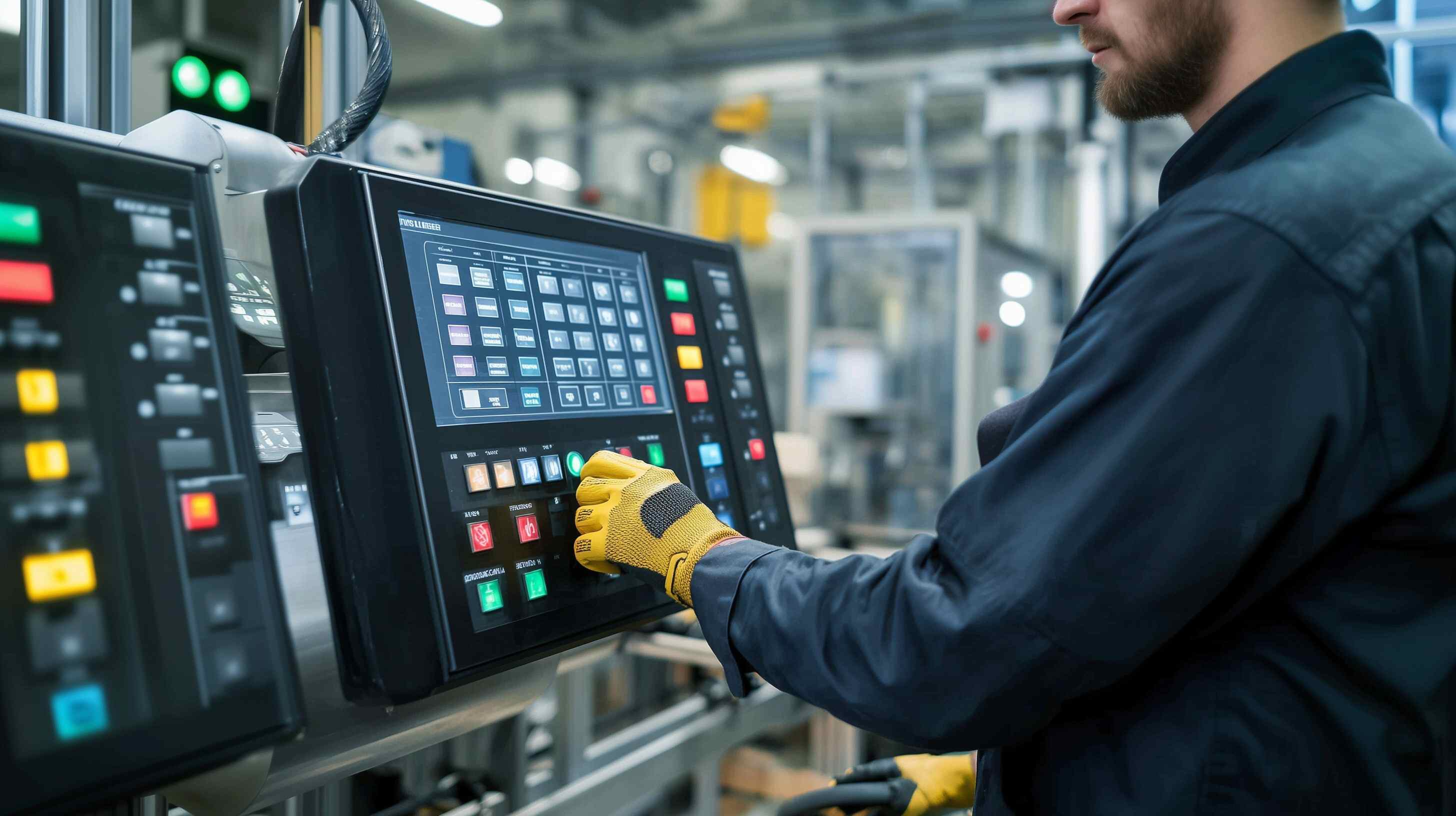
Reducing failures and maintenance in industrial control panels
Many machine downtimes and maintenance interventions in industrial control panels are not caused by core systems, but by secondary components selected without considering temperature, vibrations, humidity, and operating cycles. In these conditions, even a simple indicator light can become a recurring source of failures, replacements, and unexpected operating costs.
In many cases, the issue is not the individual indicator, switch, or pilot light itself, but the fact that it has not been selected for the actual working environment: high temperatures, vibrations, moisture, washdowns, and continuous operation. Under these conditions, even a LED pilot light becomes a critical component for the overall reliability of the system.
Reducing failures and maintenance is not about reacting faster when something breaks. It is about designing and selecting components that are built to last, reducing downtime and lowering the total cost of ownership (TCO).
In this guide, we explore how to choose reliable industrial indicator lights, what the most common causes of failure are, and which solutions help reduce maintenance and costs over time.
Are maintenance costs getting out of control?
Contents
- How to choose reliable industrial indicator lights
- Common causes of indicator light failure in industrial control panels
- Light indicators under high temperatures, vibrations, and harsh environments
- IP rating: how to choose between IP65, IP66, IP67, and IP68
- Anti-vandal and heavy-duty indicator lights: when they are really needed
- Low-cost components: when they are truly an efficient choice
- How to reduce maintenance and downtime in industrial control panels
- Reducing TCO: the real objective when selecting indicator lights
- UV-C LED technology and sanitation: reducing failures, maintenance, and issues
- Problem – Technical Solution – Benefit
- Common mistakes when selecting indicator lights for industrial control panels
- Frequently asked questions
- Additional recommendations
- Glossary
How to choose reliable industrial indicator lights
Choosing an indicator light may seem like a simple decision, but in industrial environments it directly impacts reliability, maintenance, and long-term costs. A pilot light installed on a control panel, professional machine, or HoReCa equipment often operates for many hours a day, under conditions that are far more demanding than those found in residential or commercial environments.
For this reason, it is essential to distinguish between generic indicator lights and components specifically designed for industrial applications. The difference is not just about brightness or appearance, but primarily about material quality, thermal management, electronic stability, and long-term durability.
When designing a visual signalling system for a panel or machine, the selection process should start with a few key technical questions:
- What environment will the indicator operate in?
- Will it be exposed to vibrations?
- Are high temperatures involved?
- Is there water, steam, or dust present?
- How many hours per day will it be in operation?
- How critical is this signalling point for the machine's operation?
These questions help prevent common mistakes, such as selecting a pilot light based only on price or panel cut-out size, without considering the component's real operating lifespan. In many cases, recurring failures in control panels are not due to manufacturing defects, but to an initial selection that was not suited to the actual application.
To explore selection criteria and the different types available in more detail, it can be useful to review an overview of indicator light types and a guide on how to choose the right visual signalling solution.
If you prefer to start from the basics and better understand what pilot lights are and how they work, you can also refer to a dedicated introduction on the topic.
Another key aspect is the technology used. Today, most indicator lights rely on LED technology, but not all LEDs perform the same: efficiency, lifespan, stability, and behaviour under high temperatures can vary significantly.
For this reason, it is important to understand the differences between LED technologies used in indicator lights, including SMD LEDs and other industrial LED solutions.
In industrial applications, certain technical features make a real difference in terms of durability and reliability. For example, anti-vandal indicator lights with metal or chrome-plated brass bodies offer greater mechanical resistance compared to standard versions.
Similarly, an IP65 rating or higher on the front panel protects the component from washdowns, moisture, and dust, while materials and finishes resistant to chemical agents ensure longer service life in aggressive environments.
In high-temperature applications, it is essential to use versions designed to operate up to 150°C, preventing premature degradation of the light source and plastic components. Finally, the use of high-efficiency micro LEDs allows for strong light output while reducing the operating temperature of the component.
Selecting the right indicator light is not just about making a pilot light work — it is about preventing failures, reducing maintenance, and improving the overall reliability of the machine or control panel in which it is installed.
Choosing the right indicator light means preventing failures and reducing maintenance interventions.
Common causes of indicator light failure in industrial control panels
In most industrial applications, indicator lights and LEDs do not operate under ideal conditions. They are installed in control panels, professional machines, HVAC systems, and food service or refrigeration equipment, where high temperatures, vibrations, humidity, dust, and frequent switching cycles are common. Over time, all these factors accelerate component degradation and reduce the actual lifespan of the indicator.
The most common causes of failure include:
- high temperatures, which accelerate the degradation of the light source and plastic components
- vibrations, which can damage solder joints and electrical connections
- moisture and water ingress when the IP rating is not adequate
- dust and grease, which over time affect visibility and heat dissipation
- voltage fluctuations or unstable power supply
- continuous operation over long periods
A visual signalling device installed on an industrial oven, a professional coffee machine, or a panel located near motors and compressors operates under completely different conditions compared to one installed in a clean, temperature-controlled environment.
Another key factor is the technology used: the choice between different lighting technologies directly affects lifespan and maintenance requirements. For those looking to optimise costs and long-term reliability, it is also important to understand how to select reliable industrial LED components.
Understanding why an indicator light fails is the first step to preventing repeated replacements, maintenance interventions, and machine downtime.
High temperatures, vibrations, and harsh environments: what happens to indicator lights
In many industrial applications, indicator lights and pilot lights operate in demanding conditions, where temperature, vibrations, humidity, and contaminants are part of normal machine operation. In these environments, the lifespan of an indicator light depends far more on operating conditions than on brightness or design.
Typical examples include:
- industrial ovens
- professional cooking equipment
- coffee machines
- refrigerated display units
- HVAC systems
- panels installed near motors or compressors
- outdoor applications exposed to rain, sunlight, and temperature fluctuations
Under high temperatures, plastic materials can degrade more quickly, seals may lose effectiveness, and pilot lights can experience a reduction in their operational lifespan. Continuous vibrations, on the other hand, can damage electrical connections over time, loosen fixings, and cause micro-interruptions that lead to intermittent failures, often difficult to diagnose.
Humidity, frequent washdowns, and the presence of dust or grease can also compromise the performance of an indicator light if the component is not designed with the appropriate IP rating and suitable materials.
In applications such as commercial refrigeration, HVAC systems, or professional kitchens, it is therefore essential to select indicator lights designed to withstand harsh conditions.
When it comes to reliability, the key question is not just how long an indicator lasts, but in which environment it is expected to operate. The operating context is the single most important factor affecting the actual lifespan of an indicator light.
IP rating: how to choose between IP65, IP66, IP67, and IP68
When designing a visual signalling system for a panel or machine, one of the most common mistakes is underestimating the importance of the IP rating. Components are often selected based on size, voltage, or light colour, without considering whether they are adequately protected against dust, water, steam, or frequent washdowns.
The IP rating (Ingress Protection) defines the level of protection of a component against solid particles and liquids. Choosing the correct IP rating means preventing ingress, corrosion, short circuits, and, over time, indicator light failures.
In summary:
- IP65: protected against dust and water jets
- IP66: protected against more powerful water jets
- IP67: protected against temporary immersion
- IP68: protected against prolonged immersion
The selection should not be based on a "better safe than sorry" approach by always choosing the highest rating, but on the actual operating environment. In many indoor industrial panels, IP65 may be sufficient. In applications involving frequent washdowns, outdoor environments, or particularly harsh conditions, IP66 or IP67 may be required. For outdoor installations or where continuous water exposure is expected, IP68 may be necessary.
The challenge is that failures often do not occur immediately, but after months or even years, when moisture or dust has gradually entered the component. These are often referred to as "slow failures" — difficult to diagnose and typically leading to repeated replacements without addressing the root cause.
To better understand how to select the appropriate IP rating and in which applications a higher level of protection is required, it can be useful to explore specific use cases, such as HVAC systems or indicator lights used in harsh and outdoor environments.
Selecting the correct IP rating is a decision that directly affects component lifespan and overall maintenance requirements.
An inadequate IP rating
almost always leads to failures over time.
Anti-vandal and heavy-duty indicator lights: when they are really needed
In many industrial and professional applications, the issue is not only temperature or humidity, but also the mechanical resistance of the component. Accidental impacts, intensive use, pressure on buttons and indicators, vibrations, or installation in publicly accessible environments can easily damage a standard indicator light.
In these contexts, using anti-vandal or heavy-duty indicator lights is not primarily a safety choice, but a decision related to long-term operational continuity. A mechanically damaged indicator must be replaced, and that means maintenance, downtime, and additional costs.
Anti-vandal indicator lights are typically designed with:
- metal bodies or high-strength materials
- reinforced front panels
- more stable mounting systems
- protection against impacts and tampering
- higher resistance to wear over time
These characteristics make them suitable, for example, for:
- HoReCa equipment
- professional coffee machines
- vending and dispensing systems
- HVAC panels installed in accessible areas
- outdoor applications
- machines subject to continuous use
In these cases, choosing a standard indicator light can lead to frequent replacements caused not by electrical failures, but by mechanical damage or wear. For this reason, in many applications, selecting anti-vandal indicator lights is primarily a maintenance-driven decision, not just a matter of impact resistance.
In many situations, the real question is not whether the indicator works, but how long it will continue to operate without failure or damage.
Mechanical resistance is often what ultimately determines the real lifespan of an indicator light.
Low-cost components: when they are truly an efficient choice
In industrial environments, cost reduction is always a key objective. For this reason, when selecting indicator lights, pilot lights, and LED components, price is often one of the first criteria considered. However, when dealing with components expected to operate for years within a machine or control panel, the initial cost is not the only parameter that matters.
There is a significant difference between a component that is simply inexpensive and one that is designed to be efficient over time. In the first case, the purchase price is low, but lifespan may be limited and replacements more frequent. In the second case, the component is engineered for durability, reduced maintenance, and operational continuity, resulting in a positive impact on total cost over time.
When an indicator light fails frequently, the real cost is not the component itself, but:
- the time required for replacement
- the maintenance intervention
- machine downtime
- spare parts management
- potential end-user dissatisfaction
In these situations, a low-cost indicator designed for industrial use can be the most efficient solution, as it provides the right balance between initial cost, reliability, and lifespan.
For many OEMs, the real challenge is not finding the cheapest component, but identifying the most efficient one over the machine's lifecycle. True cost savings are not achieved at the point of purchase, but over time.
How to reduce maintenance and downtime in industrial control panels
Reducing maintenance is not just about reacting quickly when a component fails — it is primarily about designing the system so that failures occur less frequently. In industrial control panels and professional equipment, indicator lights, pilot lights, and backlighting systems are often continuously on or subject to frequent switching cycles. For this reason, they tend to be one of the main sources of maintenance interventions.
Reducing maintenance therefore starts at the design stage and with proper component selection. Some technical choices can make a significant difference over time:
- selecting indicator lights designed for industrial use
- correctly evaluating the required IP rating
- considering temperature and vibration conditions
- using components with extended lifespan
- standardising components to simplify replacements and spare parts management
- using, where necessary, custom components designed for the specific application
In many OEM applications, component standardisation combined with reliable solutions can significantly reduce the number of technical interventions, simplify spare parts management, and minimise machine downtime.
In some cases, solutions such as LED backlighting or fibre optic systems can further improve reliability and reduce maintenance — especially when visual signalling needs to be distributed across multiple points or in areas that are difficult to access.
Maintenance is determined at the design stage.
Reducing TCO: the real objective when selecting indicator lights
By now, it should be clear that when selecting indicator lights, pilot lights, or backlighting systems for a machine or industrial control panel, the component price is only part of the actual cost. Over time, the most significant costs are related to maintenance, replacements, and machine downtime. This is where the concept of TCO (Total Cost of Ownership) comes into play: the total cost of a component throughout its entire lifecycle.
The TCO of an indicator light includes:
- installation time
- maintenance interventions
- replacement costs
- spare parts management
- machine downtime
- warranty or service interventions
In many industrial applications, the cost of a single replacement can be significantly higher than the cost of the component itself. If an indicator light fails frequently, the total cost over time becomes much higher than that of a more reliable component designed for long-term performance.
For this reason, when designing control panels or professional equipment, it is essential to select components that ensure reliability and durability, in order to reduce the number of interventions and the overall cost of ownership.
Reducing TCO therefore means taking a broader view — one that considers not only the initial purchase price, but everything that happens throughout the component's lifecycle.
UV-C LED technology and sanitation: reducing failures, maintenance, and system issues
In certain applications, such as professional coffee machines, refrigeration systems, HVAC installations, or food service equipment, one of the main challenges is the presence of bacteria, mould, limescale, or organic residues that can, over time, affect the proper functioning of the equipment.
In these contexts, sanitation becomes an integral part of maintenance. If not properly managed, it can lead to:
- malfunctions
- reduced efficiency
- more frequent maintenance interventions
- hygiene-related issues
- reduced component lifespan
Germicidal UV-C LED technology enables the sanitisation of surfaces, air, or water without the use of chemicals and without frequent manual intervention. This helps reduce the formation of contaminants and deposits that, over time, can cause blockages, failures, or performance loss in equipment.
In applications such as professional coffee machines, for example, UV-C LED sanitation can help keep certain circuits clean and reduce maintenance interventions related to contamination or residue build-up.
In these cases, reducing failures and maintenance is not only about selecting the right indicator light, but also about integrating solutions that keep the system cleaner and more efficient over time.
Proper sanitation can reduce not only hygiene-related issues, but also failures and maintenance interventions.
Problem – Technical Solution – Benefit
Indicator light failures are rarely random. They are typically linked to specific operating conditions, incorrect component selection, or improper integration into the control panel.
The table below summarises the most common issues, the corresponding technical solutions, and the resulting benefits in terms of reliability, maintenance, and component lifespan.
|
Problem |
Technical solution |
Benefit |
| Frequent indicator light failures | Use reliable industrial indicator lights designed for continuous operation | Fewer replacements and improved reliability |
| Water or dust ingress | Select the appropriate IP rating (IP65, IP66, IP67, IP68) | Longer component lifespan and fewer failures |
| Mechanical damage and wear | Use anti-vandal or heavy-duty indicator lights | Reduced maintenance and increased durability |
| High temperatures and vibrations | Use components designed for harsh environments | Greater stability and fewer failures over time |
| High maintenance costs | Choose efficient, long-life industrial components | Reduced TCO and operating costs |
| Contamination and residue build-up | Use sanitation systems such as UV-C LED solutions | Fewer issues and reduced maintenance interventions |
| Distributed visual signalling | Use LED backlighting or fibre optic systems | Improved reliability and fewer technical interventions |
Indicator light reliability does not depend on a single factor, but on the combination of design choices. Considering the operating environment, usage conditions, and technical characteristics helps prevent failures and improve operational continuity.
Common mistakes when selecting indicator lights for industrial control panels
One of the most common mistakes is selecting an indicator light based only on price or size, without considering the environment in which it will operate. In many cases, this leads to frequent replacements and higher maintenance costs over time.
Another critical point is underestimating the importance of the IP rating. In the presence of moisture, washdowns, or dust, an inadequate IP rating will almost always result in failures in the medium term, even if the indicator initially performs correctly.
Real operating conditions are also often overlooked. Factors such as high temperatures, vibrations, and continuous operation have a direct impact on the lifespan of LEDs and electronic components.
In OEM applications, a frequent mistake is using too many different components. A lack of standardisation makes spare parts management more complex and increases maintenance time.
Finally, there is a tendency to focus only on the purchase price of the component, without considering the total cost over time. Maintenance, replacements, and machine downtime often represent a much higher cost than the component itself.
Frequently asked questions
How long does an industrial LED indicator light last?
The lifespan of an industrial LED indicator light depends on operating conditions. In controlled environments, it can last tens of thousands of hours. However, high temperatures, vibrations, humidity, or continuous use can significantly reduce its actual lifespan. For this reason, it is essential to select components designed for the specific environment in which they will operate.
How do you choose the right IP rating for an indicator light?
The correct IP rating depends on the operating environment. For indoor applications without washdowns, IP65 may be sufficient. In the presence of water, steam, frequent washdowns, or outdoor conditions, IP66, IP67, or IP68 may be required. Choosing the right IP rating helps prevent ingress and long-term failures.
Do LED indicator lights require maintenance?
LED indicator lights generally require less maintenance than technologies such as neon or incandescent lamps. However, they are not maintenance-free, especially in harsh environments. Maintenance needs depend mainly on temperature, vibrations, IP rating, and component quality.
When should anti-vandal indicator lights be used?
Anti-vandal indicator lights are recommended in environments subject to impacts, intensive use, or public access, such as HoReCa equipment, vending machines, outdoor panels, or HVAC systems installed in shared areas. In these contexts, they help reduce mechanical damage and frequent replacements.
How can failures in industrial control panels be reduced?
Reducing failures requires selecting components designed for industrial use, choosing the correct IP rating, considering temperature and vibration conditions, using reliable components, and standardising solutions to simplify maintenance and spare parts management.
What is TCO in industrial components?
TCO (Total Cost of Ownership) is the total cost of a component over its entire lifecycle. It includes not only the purchase price, but also installation, maintenance, replacements, spare parts management, and costs related to machine downtime.
Additional recommendations
At the design stage, it can be highly beneficial to standardise indicator lights as much as possible across different machines or panel models. Using similar or compatible components simplifies spare parts management, reduces maintenance time, and makes replacements easier over the lifecycle of the equipment.
Another often overlooked aspect is the positioning of the indicator light within the panel or machine. Installing a pilot light too close to heat sources, motors, or vibration-prone areas can significantly reduce its lifespan. During the design phase, it is important to consider not only where the signal is most visible, but also where the component can operate under less demanding conditions.
In more complex applications, it may be useful to integrate LED backlighting or fibre optic systems from the early design stage to bring light to areas that are difficult to access or subject to complex maintenance. This allows the light source to be located in a more protected and easily serviceable area.
Finally, when visual signalling plays a key role in the machine or user interface, involving the component supplier early in the design process can be highly beneficial. In many cases, it is possible to develop custom solutions that improve reliability, simplify installation, and reduce maintenance over time.
Glossary
Thermal stress
A condition in which a component is exposed to temperature fluctuations or sustained high temperatures that accelerate material degradation and reduce the lifespan of LEDs and electronic parts.
Downtime
The period during which a machine or system is not operational due to failures, maintenance, or component replacement. In industrial environments, downtime represents one of the most significant costs related to component reliability.
TCO (Total Cost of Ownership)
The total cost of a component over its entire lifecycle, including not only the purchase price, but also maintenance, replacements, spare parts management, and costs associated with machine downtime.
Luminous degradation
The gradual reduction of LED light output over time. It is influenced by temperature, operating conditions, and overall component quality.
IP rating (Ingress Protection)
A classification that defines the level of protection of a component against the ingress of dust and liquids. It is a critical parameter for ensuring reliability in industrial and harsh environments.
Mechanical vibrations
Stresses generated by machines, motors, or compressors that can, over time, affect electrical connections, solder joints, and the overall stability of the component.
Reducing failures and maintenance in industrial control panels is not a matter of intervention, but of initial selection. Evaluating indicator lights, operating conditions, and technical specifications correctly allows you to improve reliability, operational continuity, and total cost over time.
If you are designing a machine or control panel, working with a partner that has over 50 years of experience in developing these components can help you avoid mistakes and optimise results from the very beginning.
Choose experience