

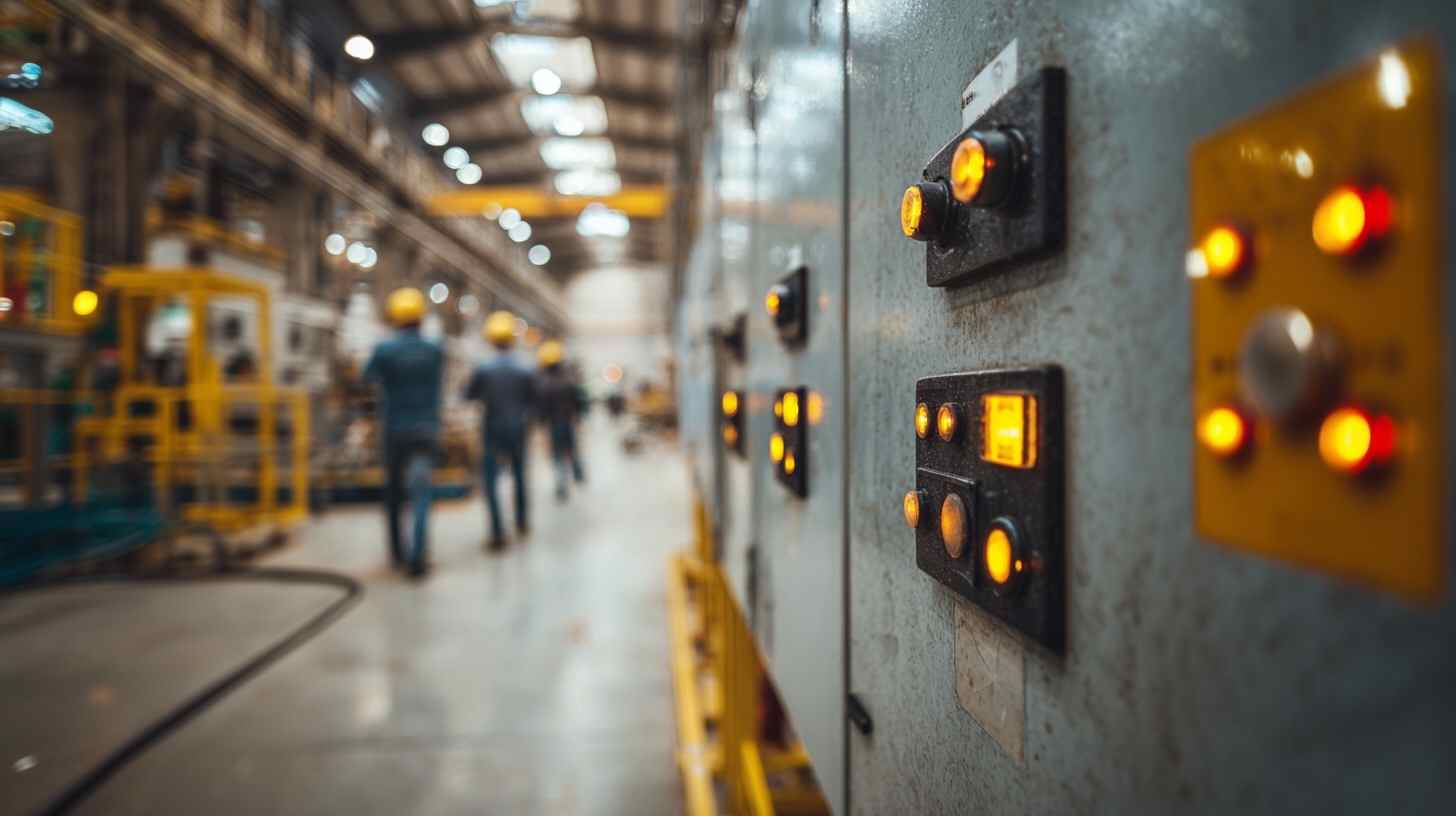
Explore our dedicated comprehensive guide, if you want to learn how to design reliable indicator lights and reduce failures and maintenance in industrial control panels.
Efficiency isn't a luxury, it's a technical requirement
If you design machines, panels or control boards, you know it well: even a tiny detail, a pilot light, a micro spotlight, a small LED indicator, can affect performance, lifespan and reliability. In industrial components, cutting consumption and costs isn’t a strategic option anymore. It’s a technical must.
In this context, affordable and sustainable industrial LEDs are the ideal choice: they use little energy, last a long time and ensure stable operation with a minimal investment.
Light your equipment with efficiency

Sustainable LEDs: reliable light with lower consumption
In industry, “sustainable” doesn’t refer only to the environment. It applies to the entire life cycle of the component:
- longer life and fewer discarded parts,
- fewer maintenance interventions,
- stable luminous efficiency even in continuous operation,
- reliable, easily recyclable materials.
A sustainable LED isn’t a niche product. It’s a design choice that helps you save energy and boost productivity. A reliable indicator keeps working across its full expected lifespan — without demanding attention.
AN EFFICIENT LOW COST LED COSTS Less,
LASTS LONGER AND SAVES money EVERY DAY.
Low cost LEDs: when price becomes a technical advantage
In the industrial world, "low cost" doesn't mean "low quality". A well-designed low-cost LED is built to deliver maximum performance with minimum waste, thanks to streamlined design, optimized materials and solid quality control.
The real value isn’t the list price, it’s the engineering logic: lower thermal dispersion, longer operating life, higher energy efficiency.
For technicians and designers working with large volumes, this becomes a concrete competitive advantage.
How much can you save with an industrial LED indicator?
Even a single pilot light, switch or LED indicator, if chosen carefully, can cut consumption significantly. Compared to old incandescent or mini-neon technologies, an industrial low-cost LED uses far less energy and needs virtually no maintenance.
| Light source type | Average power (W) | Estimated lifespan (hours) | Annual consumption (24/7) | Estimated annual cost* |
|
Incandescent |
3 W |
1.000 |
26.3 kWh |
~€5,50 |
|
Industrial mini |
2 W |
5.000 |
17.5 kWh |
~€3,60 |
|
Industrial low- |
0,5 W |
30.000+ |
4.4 kWh |
~€0,90 |
*Based on an average energy cost of €0.21/kWh.
Across large production volumes, hundreds or thousands of indicators, the cumulative savings are clear: less consumption, fewer stops, fewer replacements. And in applications where devices run 24/7, even a few tenths of a watt per light point translate into hundreds of euros saved each year, plus much lower maintenance costs. A benefit that grows with scale.
AN EFFICIENT LOW-COST LED CAN CUT CONSUMPTION
BY UP TO 80% AND ELIMINATE MAINTENANCE.
Energy efficiency and industrial competitiveness
Industrial sustainability isn’t just ecological, it’s economic. A component that uses less energy and lasts longer reduces service costs, increases machine reliability and strengthens your brand reputation.
According to the International Energy Agency, LED technology has already avoided more than 1.5 billion tons of CO₂ emissions worldwide. A number that confirms how low-cost LEDs are both responsible and efficient.
Save more, spend less

When sustainability is simply of common sense
You don’t need to revolutionize production to reduce environmental impact. In industry, true sustainability isn’t a slogan, it comes from clear technical choices. Often, you just optimize where efficiency is already measurable:
- choose LEDs with low thermal dispersion (they cut consumption and extend electronic component life)
- reduce assembly waste through smarter processes and quality checks
- use compact, recyclable packaging to lower transport impact
- streamline logistics and warehouse flows to reduce materials and handling
Most of these actions don’t increase costs. They generate value: less absorbed energy, fewer interventions, fewer components discarded. In industry, sustainability means doing more with less, less energy, fewer materials, less waste, without compromising performance or margins.
REDUCING CONSUMPTION IS ESSENTIAL.
DOING IT WITHOUT RAISING COSTS is SMART.
FAQ: Industrial low-cost LED components
Are low-cost LEDs reliable in industrial applications?
Yes, if designed with quality materials and tested for heat, vibration and continuous use.
How much can you save with efficient industrial LEDs?
Energy savings can reach 70–80% compared to traditional technologies, with a fast ROI.
Do sustainable LEDs cost more?
No. Today the price difference is minimal and largely offset by longer service life and lower maintenance.
What does “industrial sustainability” mean for an LED?
Ensuring efficiency, long lifespan and process compatibility, without increasing environmental impact.
Are low-cost industrial LEDs compatible with existing systems?
Yes. Most are direct retrofit solutions and don’t require wiring changes.
How do you evaluate the quality of an affordable LED?
Look at long-term luminous stability and mechanical strength, they make the real difference in the field.
Extra tips
- Always check LED thermal tolerance when used in warm environments.
- Prefer metal or technical polycarbonate housings for long-term resistance.
- For harsh environments, choose models with IP67 or higher protection.
The shift toward more efficient industrial components has already begun, and it’s not just for major manufacturers. Also, smaller producers and system integrators adopting new-generation low-cost LEDs are building their competitive edge, day after day. Because today, in industry, “affordable” doesn’t mean lower quality, it means smart engineering.
Custom low-cost LED indicators?
